Running a business in 2026 is more challenging than ever. ERP software has become an essential solution for companies that want to manage finance, human resources, inventory, sales, customer relationships, and daily operations from a single platform. Instead of using multiple disconnected systems, an ERP solution automates workflows, reduces errors, improves productivity, and helps businesses make smarter decisions. Whether you’re a startup, a growing business, or a large enterprise, ERP software can simplify operations and support long-term business growth.
In this guide, you’ll learn what ERP software is, its key features, major benefits, and why every modern business should consider implementing an ERP system in 2026.
What is ERP Software?
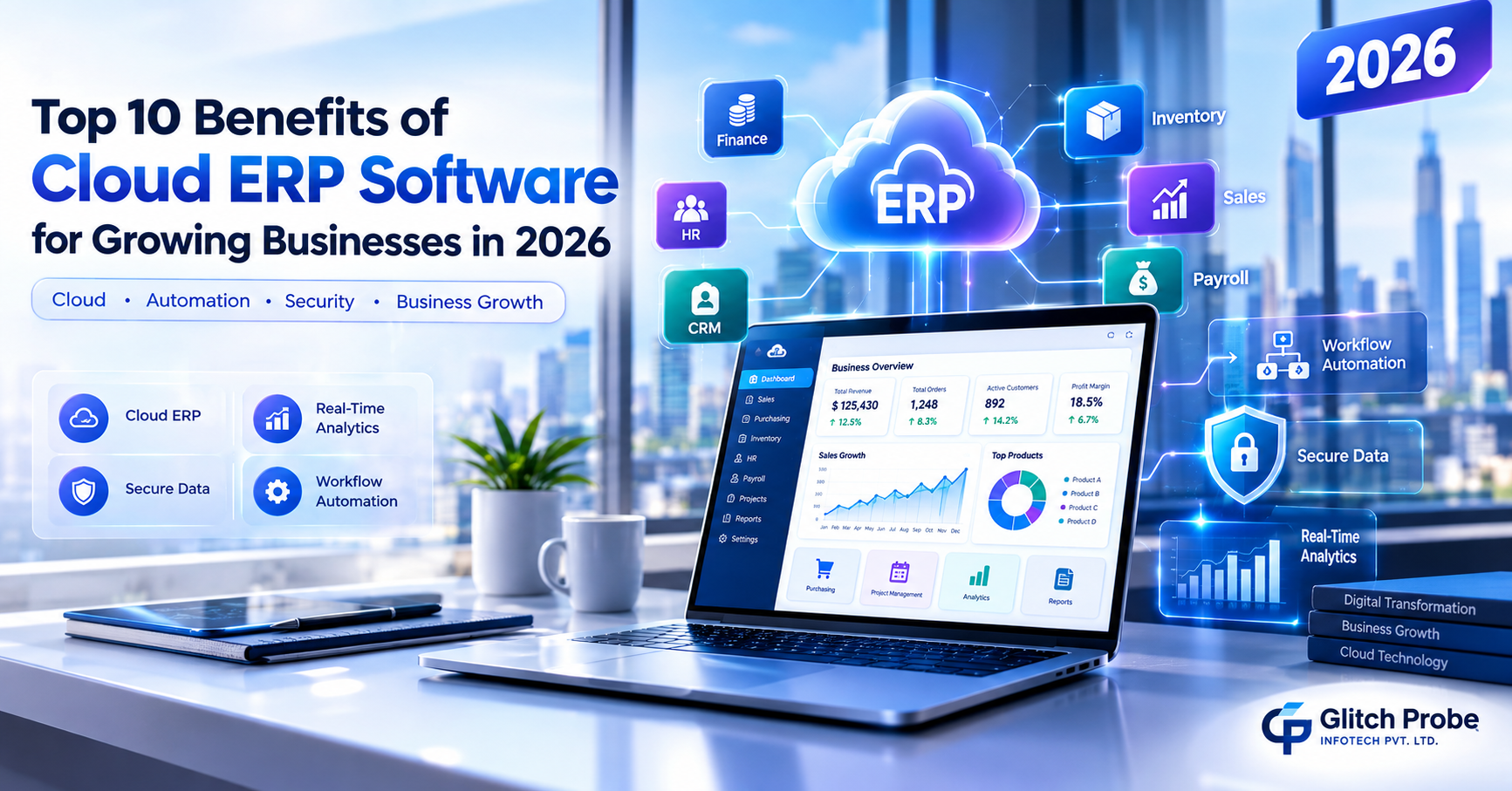
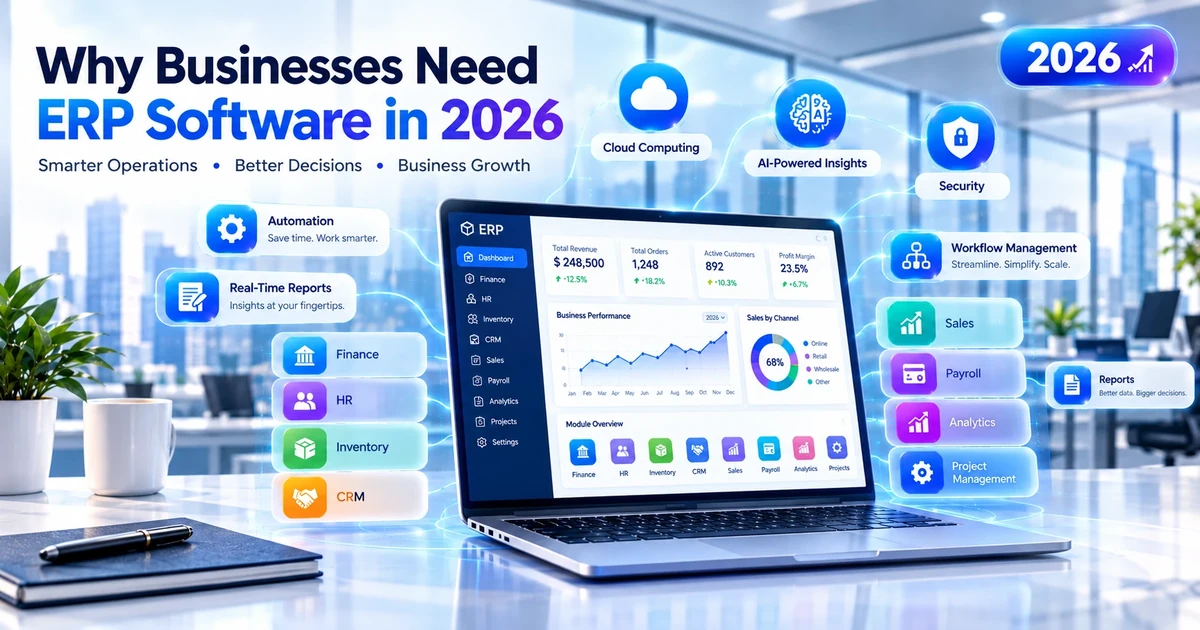
ERP (Enterprise Resource Planning) software is an integrated business management system that connects different departments into one centralized platform.
It helps businesses manage:
- Finance
- Human Resources
- Sales
- Customer Management
- Inventory
- Purchasing
- Manufacturing
- Project Management
- Reporting
Instead of working with multiple software applications, businesses can manage everything from one secure dashboard.
Why Businesses Need ERP Software in 2026
1. Centralized Business Management
An ERP platform stores all business information in one secure database. Employees across different departments can access accurate and updated information, improving collaboration and reducing duplicate work.
2. Increased Productivity
Manual work slows down business operations.
An ERP solution automates routine tasks such as:
- Invoice generation
- Payroll
- Attendance
- Purchase Orders
- Inventory Updates
- Financial Reports
This allows employees to focus on high-value activities.
3. Better Decision Making
Modern ERP systems provide real-time dashboards and business analytics.
Business owners can instantly monitor:
- Sales Performance
- Revenue
- Expenses
- Inventory
- Customer Activity
- Employee Productivity
Real-time insights help businesses make faster and smarter decisions.
4. Improved Financial Management
Business management software simplifies accounting by managing:
- Accounting
- Tax Calculations
- Budget Planning
- Cash Flow
- Profit Analysis
- Financial Reporting
This improves financial accuracy and reduces manual errors.
5. Inventory Control
Inventory management becomes easier with ERP.
Businesses can:
- Track Stock Levels
- Reduce Overstocking
- Prevent Stock Shortages
- Manage Warehouses
- Monitor Product Movement
Better inventory control leads to improved operational efficiency and lower costs.
6. Better Customer Experience
ERP integrates customer information with sales and support teams.
Businesses can:
- Respond Faster
- Track Customer History
- Improve Communication
- Deliver Personalized Services
Satisfied customers are more likely to become repeat customers.
7. Automation Across Departments
An ERP platform automates repetitive business processes.
Examples include:
- Employee Attendance
- Leave Approvals
- Invoice Generation
- Sales Tracking
- Inventory Updates
- Notifications
- Reports
Automation saves time while reducing operational costs.
8. Scalable for Business Growth
As companies expand, operations become more complex.
ERP software grows with your business by supporting:
- New Employees
- Additional Branches
- More Customers
- New Products
- Higher Transaction Volumes
This makes ERP a long-term investment.
9. Strong Data Security
Modern ERP solutions provide advanced security features including:
- User Permissions
- Role-Based Access
- Automatic Backups
- Audit Logs
- Data Encryption
Sensitive business information remains secure and protected.
10. Competitive Advantage
Businesses using ERP often experience:
- Faster Operations
- Better Customer Satisfaction
- Lower Operating Costs
- Improved Efficiency
- Better Planning
These advantages help businesses stay ahead of competitors.
Key Features of ERP Software
A modern ERP solution generally includes:
- Finance & Accounting
- Human Resource Management
- Payroll
- Inventory Management
- CRM Integration
- Sales Management
- Purchase Management
- Project Management
- Reporting & Analytics
- Workflow Automation
- Mobile Access
- Cloud Integration
Benefits of ERP Software
Businesses using ERP systems can enjoy:
- Improved Productivity
- Better Collaboration
- Accurate Reporting
- Faster Business Operations
- Reduced Manual Work
- Better Customer Service
- Real-Time Insights
- Lower Operational Costs
- Stronger Security
- Increased Profitability
Industries That Benefit from ERP Software
ERP solutions are widely used in:
- Manufacturing
- Healthcare
- Real Estate
- Education
- Retail
- E-commerce
- Logistics
- Construction
- Hospitality
- IT Services
Almost every industry can improve efficiency by implementing ERP software.
How to Choose the Right ERP Software
Before investing in an ERP system, consider the following factors:
- Business Size
- Required Modules
- Scalability
- Customization Options
- Cloud or On-Premise Deployment
- User-Friendly Interface
- Integration Capabilities
- Security Standards
- Technical Support
- Budget
Choosing the right ERP solution ensures long-term success.
Future of ERP Software
ERP technology continues to evolve.
Modern ERP platforms now include:
- Artificial Intelligence (AI)
- Machine Learning
- Predictive Analytics
- Business Intelligence Dashboards
- Cloud Computing
- Mobile ERP
- IoT Integration
- Workflow Automation
These technologies help businesses become smarter, faster, and more efficient.
Conclusion
ERP software is no longer just an option—it’s a necessity for businesses in 2026. By integrating business processes into a single platform, it improves productivity, automates daily operations, enhances financial management, and strengthens customer relationships.
Whether you’re a startup or an established enterprise, the right ERP solution can cut costs, boost efficiency, and support long-term growth. Investing in ERP today prepares your business for tomorrow’s challenges.
FAQs
What is ERP software?
ERP (Enterprise Resource Planning) software integrates multiple business processes into a single, centralized system to improve efficiency and management.
Who should use ERP software?
Startups, small businesses, medium-sized companies, and large enterprises across various industries can benefit from ERP software.
Is ERP software suitable for small businesses?
Yes. Modern ERP solutions are scalable and can be customized to meet the needs of small and growing businesses.
What are the biggest benefits of ERP software?
ERP software improves productivity, automates workflows, enhances reporting, strengthens customer management, and reduces operational costs.
Can ERP software be customized?
Yes. Custom ERP solutions can be tailored to fit your unique business processes and requirements.